Who are you?
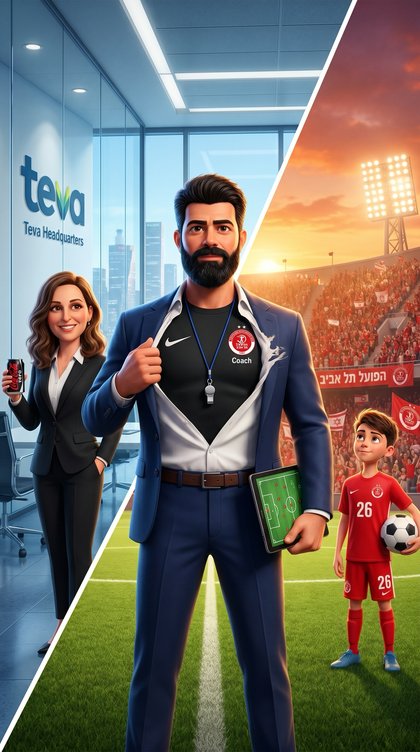
I coach kids at Hapoel Tel Aviv. I'm also an industrial engineer. Over 25 years in industry, most of them in technology and information systems.
Twenty years at Teva. What did you do there?
I led an international technology group. Around 40 people, spread across the world. We ran the systems behind the company's business processes, with a heavy focus on manufacturing and supply chain. The job was to run those processes and make them better.
How big was it?
More than a hundred sites. Thousands of users. Dozens of systems. A budget in the millions of dollars a year.
Some of those systems ran production lines, 24 hours a day. A system goes down, a line stops.
And when something broke?
I was responsible for business continuity and disaster recovery. Plans, drills, and the real thing: war, COVID, outages.
So where does football come in?
I played as a kid. I was good. I stopped very early, the setup was too rigid for me.
I love sport. I swim, I run, I play basketball and football. For fun.
What changed?
My son started playing at Hapoel Tel Aviv. I found myself spending hours on the touchline, watching.
I could have been one more Israeli dad who's sure he knows better than the coach. Instead, I went and studied it properly.
Where did you study?
On the Israel Football Association course for the UEFA C diploma. I was lucky, I met a brilliant team there. The course was mostly about education and working with children.
Education. Did that surprise you?
Not really. I've always got on well with kids. At one point I considered moving into education. Football is a lot more fun than maths.
You've worked with people all over the world. What did that teach you?
I ran dozens of international projects. Different cultures, women and men, different ages, different ambitions.
I learned to work with people who aren't like me. I took that onto the pitch, and into life in general.
What do you want your players to take away?
UEFA talks about equality and inclusion. I add perseverance, patience and hard graft. They're tools, and I want to give them to my players.
What happens on your pitch?
I work with them on confidence. How to stand out on the pitch.
A player has to believe in their own ability to demand the ball. Not ask for it. Demand it.
I explain the principles, then watch them put them into practice. Good technique, honest work, and confidence that builds.
What's missing in Israeli football?
A system. Even at the big clubs I see a lot of shortcuts.
In Sweden, most kids' coaches are volunteer parents, and results aren't counted until 12. The result doesn't matter. The way you get there does.
Here, there are websites publishing kids' results and league tables, against the spirit of the guidelines. At matches between ten-year-olds, people throw smoke bombs.
I'd like us to be a bit more like Sweden. More innocent with the kids, and far more successful with the grown-ups. That system probably works.
What did you bring with you from your previous world?
Management tools. Running a team. Running a huge project over several years. Planning ahead, targets, metrics.
You've managed dozens of staff and managers. Does that help on the training ground?
The kids couldn't care less.
They'll only listen if you're interesting and you've got authority. They want to play with the ball, not sit through a lecture.
I have to find the balance between explaining and letting them play.
Is your son still at Hapoel?
No. He grew up there, and he was released recently.
I still coach there.
I came to the club because of him. I work there without him.
That's a difficulty of its own.